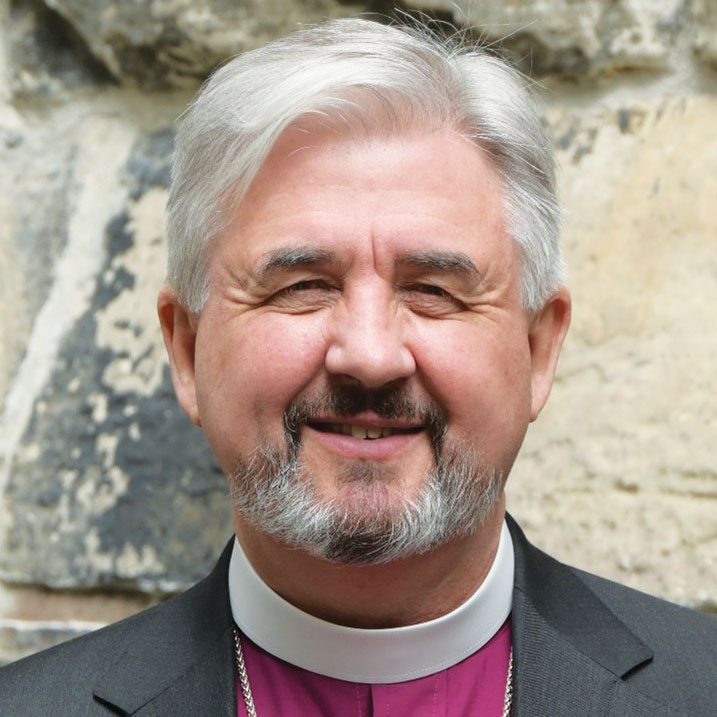
My first official visit as primate was to the gathering of Sacred Circle in Calgary last summer. During our time together, we recalled the story of how, 32 years ago, leaders of the Indigenous Anglican Church received a very clear vision that they rendered into a document called The Covenant—a gift from God to the Indigenous Church. We also recalled how consensus was achieved five years ago to adopt a document called Our Way of Life. The Covenant and Our Way of Life describe the fundamentals of the Indigenous Anglican Church in Canada.
These two documents represent the reclaiming of a legacy that is at once hundreds and thousands of years old—a reclaiming of the unique cultural expression of Anglicanism that is found in Indigenous communities across this country. After being marginalized by the Anglican Church of Canada and by the larger Canadian society—existing alongside, quiet and unnoticed— the Indigenous Anglican Church is now ascendant. It is celebrating and it is being celebrated. The Indigenous Anglican Church is growing confident as a body with ancient roots and traditions on this land. This is very good.
An important part of our church’s work toward reconciliation between non-Indigenous people and Indigenous Peoples has been to admit that our non-Indigenous forebears did not recognize and respect how God the Holy Spirit was active among the human beings of this continent for millennia before Christians came here. This failure led to great harm.
An appendix to the final report of the Truth and Reconciliation Commission of Canada contains all the formal apologies that were issued before 2015. The meaningful apology offered by Archbishop Michael Peers on behalf of the Anglican Church of Canada in 1993 reads like a poem. The words resonate with sincere contrition. But this first apology didn’t go deep enough.
The second apology, offered by Archbishop Fred Hiltz in 2019, was also profoundly heartfelt, and it addressed directly the greatest of all harms, spiritual harm. Non-Indigenous people had outlawed sacred practices, beliefs and ceremonies that were respectful of the Creator and that had given meaning and hope to Indigenous Peoples for thousands of years.
Both apologies make me feel proud of our church because there is great strength in vulnerability. They encourage non-Indigenous Anglicans to be humble listeners and to respectfully enter into the experience of Indigenous people.
Reconciliation is transformative. When we hold one another’s stories, when we hear our story accurately told by those who have harmed us—and when we can accurately tell the story of those we have harmed—the relationship will change.
Pathway Five in the Creating Pathways document, overwhelmingly adopted by General Synod in 2025, mandated us to create a new and mutually affirming relationship between non-Indigenous and Indigenous Anglican churches. Pathway Five required me and Archbishop Chris Harper, presiding elder of Sacred Circle, to lay out an action plan to build this new relationship. We have done so and a team of Indigenous and non-Indigenous Anglicans will work with the Council of General Synod’s Transformation Task Force to implement it in the months to come. This is also very good.
Pray that as we continue to faithfully walk together as Indigenous and non-Indigenous Anglicans, we will always be attentive to one another’s stories, both past and present, so that we will together grow richer as followers of Jesus.